
To clean a crystal bracelet without soaking the cord, start with a soft, dry cloth; use a barely damp cloth on individual beads only when their materials and care instructions allow it. Keep moisture away from bead holes, knots, and fittings, then dry each cleaned surface immediately. This 2026 guide explains the method, when to stop, and how to separate physical cleaning from a personal cleansing ritual.
- How to clean a crystal bracelet: dry-wipe first, then spot-clean only materials whose care instructions permit moisture.
- Keep bracelet cords, knots, and bead holes out of water; never immerse an assembled bracelet to clean individual stones.
- EclipticJew crystal jewelry carries personal symbolism; physical cleaning removes surface residue, not a measurable spiritual condition.
- Stop cleaning if you find fraying, loose fittings, chipped beads, or color transferring to the cloth.
How do you clean a crystal bracelet without soaking the cord?
Clean the bracelet bead by bead, not as a single object under running water. A stone's tolerance for water does not establish that the cord, finish, charm, or adhesive tolerates the same treatment.
Prepare 2 soft, lint-free cloths: one for cleaning and one kept dry. Work over a clean towel so the bracelet has support and cannot roll onto a hard surface. For cord-related wear, the guide to how long Buddhist prayer bead bracelets typically last provides a related reading topic.
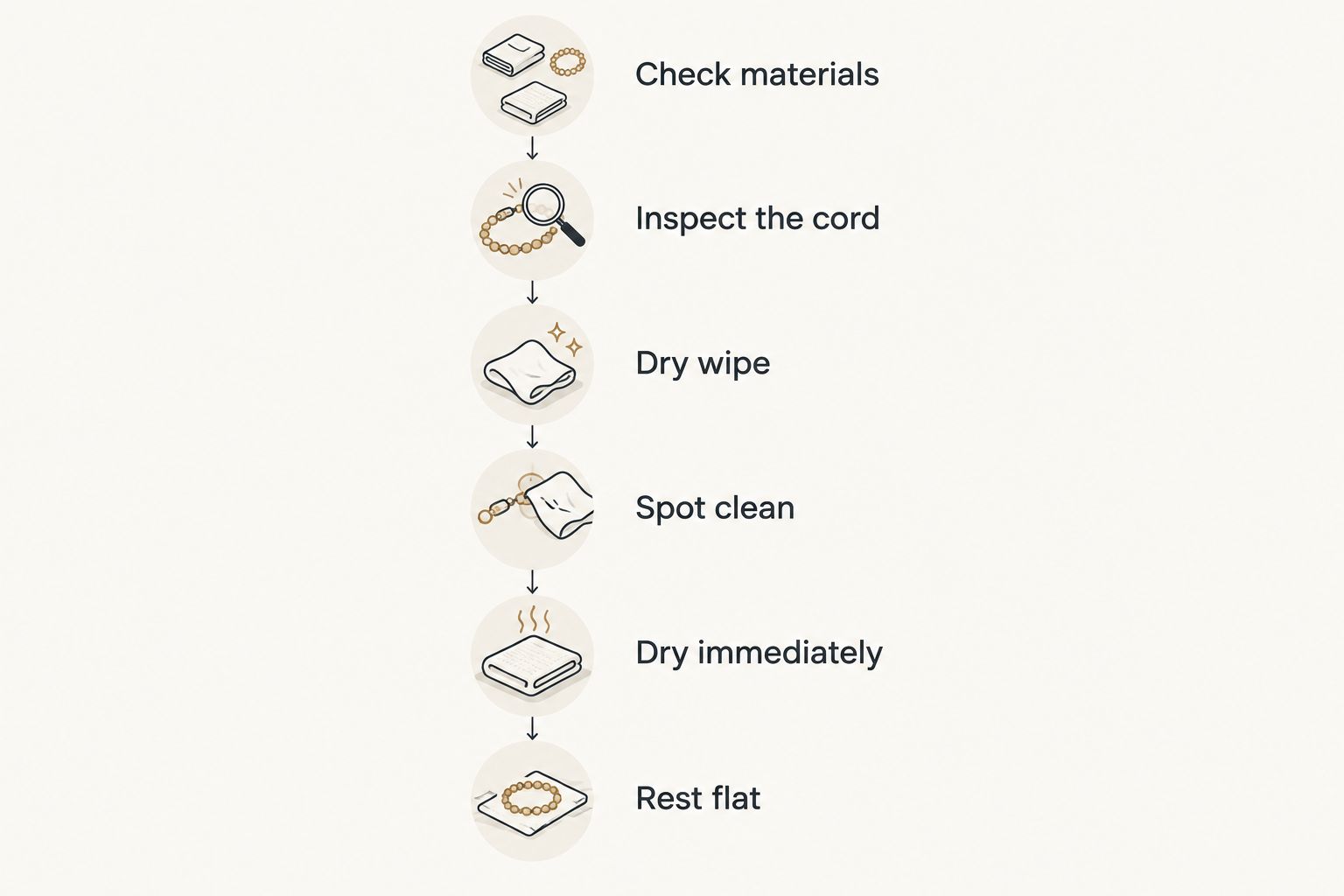
- Check materials. Read the bracelet's material description and care instructions. Look for mixed stones, wood, painted details, metal fittings, or surface treatments. If the composition is uncertain, stay with gentle dry wiping.
- Inspect the cord. Examine the visible thread, knot, and spaces between beads without pulling them apart. Set aside a bracelet with fraying, a loose knot, broken strands, or sharp chips for repair assessment.
- Dry wipe. Support the bracelet in your hand or on the towel. Wipe the exposed bead surfaces gently, moving to a clean part of the cloth as it picks up residue.
- Spot clean. If the care instructions permit moisture, dampen a small corner of the cleaning cloth with room-temperature water and squeeze it thoroughly. It should not drip or leave visible water collecting on a bead.
- Dry immediately. Work on 1 bead at a time, keeping the cloth away from its holes and the adjacent cord. Follow each damp wipe with the dry cloth; do not stretch the bracelet to reach hidden surfaces.
- Rest flat. Leave the bracelet on a clean, dry towel in a ventilated indoor spot. Put it away only when the beads, fittings, and accessible cord feel dry; avoid direct heat and sunlight as drying shortcuts.
The sequence matters. Dry wiping comes first because it avoids introducing moisture when loose dust is the only problem. Spot cleaning is a limited next step, not permission to wash the entire bracelet.
Why this matters
A bracelet is more than its stones. The cord, knots, bead holes, decorative elements, and surface finishes all belong in the care decision. Choosing a method for quartz alone overlooks everything attached to it.
Cleaning also has a different purpose from symbolic cleansing. Physical cleaning addresses dust, skin oils, and other surface residue. A personal ritual expresses intention or belief; it does not replace removing visible dirt or checking a worn cord.
For your 2026 care routine, choose the least intensive method that removes the residue. You do not need a special tool, a ritual, or a new bracelet to begin.
Which cleaning method should you choose?
Start with the bracelet's condition rather than a cleaning schedule. A piece with a little dust needs a different response from one with sticky residue or damaged stringing.
| Method | Best for | Advantage | Limitation |
|---|---|---|---|
| Gentle dry wiping | Loose dust and routine surface care | Keeps added moisture away from the assembly | Does not reliably remove sticky residue |
| Barely damp spot cleaning | Local residue on materials approved for water contact | Targets the affected bead without immersion | Requires care around holes, cord, and fittings |
| Jeweler or repair specialist | Damaged stringing, persistent residue, or uncertain finishes | Allows the bracelet to be assessed before treatment | Requires a separate assessment rather than an immediate home fix |
Dry wiping is the default, not a claim that every bracelet is washable. If a mark remains after gentle wiping, do not increase pressure automatically. Scrubbing an uncertain surface is not a substitute for knowing its material.
A damp cloth also has limits. If cleaning requires repeated wetting, working liquid between beads, or picking at the knot, stop. Those tasks extend beyond a controlled surface wipe.
Why crystal bracelet cleaning varies
The right method depends on the complete piece. These factors determine whether you should use a dry cloth, permitted spot cleaning, or professional assessment:
- Stone identity. Different minerals have different care requirements. A general label such as crystal does not identify them.
- Surface treatments. Dyes, coatings, waxes, or other treatments require their own care guidance. Natural-stone wording alone does not establish that a bead is untreated.
- Cord and knot condition. Fraying or looseness calls for assessment, not a more thorough wash. Cleaning cannot restore damaged stringing.
- Mixed components. Wood, metal, enamel, glued details, and multiple stones complicate the method. Follow the most restrictive applicable instructions.
- Type of residue. Loose dust, greasy film, and hardened deposits are different problems. Do not use a stronger cleaner simply because a dry cloth leaves a mark behind.
- Existing damage. Chips, cracks, and loose fittings are reasons to pause. Avoid forcing cloth or tools into those areas.
Color alone cannot settle the decision. Similar-looking beads can be different materials, and a polished appearance does not tell you whether the surface has been treated.
What should you avoid during cleaning?
Avoid soaking, running water, and household cleaning shortcuts unless the bracelet's specific instructions authorize them. The aim is controlled contact with the bead surface, not saturation of the assembly.
Keep these methods out of an unverified home-care routine:
- Saltwater baths or burial in salt. These introduce another substance to remove and do not solve uncertainty about cord or fitting compatibility.
- Alcohol, sanitizer, perfume, or household cleaners. Do not treat them as universal jewelry cleaners. Their compatibility depends on the materials and finishes.
- Toothpaste and abrasive powders. Avoid polishing an unknown surface with abrasive products.
- Steam and ultrasonic cleaners. Do not use them on a mixed-material bracelet without a qualified assessment.
- Hot water, hair dryers, and radiators. Drying faster is not the same as drying appropriately.
- Sharp picks between beads. Do not scrape around stringing, knots, or bead holes with needles or metal tools.
Likewise, do not apply oil to a stone bracelet simply because an oiling practice exists for some wooden objects. Wood care and mineral care are not interchangeable, and oil also contacts the other components.
What if your crystal bracelet gets wet accidentally?
Remove the bracelet and blot it gently with a soft, dry cloth. Support the whole piece while you work; do not pull the beads apart to expose the cord. Avoid twisting or wringing it.
Lay it flat on a clean towel in a ventilated indoor place, away from direct heat. Turn it gently to check the surfaces underneath, then leave it undisturbed. Do not use a fixed drying time as proof that the cord is dry.
Before wearing it again, check for a changed fit, a loose knot, fraying, discoloration, or damaged fittings. If anything looks or feels different, arrange an assessment rather than stretching the bracelet to test it.
Repeated wetting is a reason to change the wearing routine. Remove the bracelet before showering, swimming, washing dishes, or doing work that would soak it.
How often should you clean a crystal bracelet in 2026?
Clean according to visible residue and handling, not a universal calendar. Inspect the bracelet when you take it off, and give it a gentle dry wipe when it needs one. Reserve damp spot cleaning for a specific mark on a material whose instructions permit it.
There is no need to escalate to wet cleaning because a date has arrived. Frequent handling, lotions, and dusty environments give you practical reasons to inspect the surface; they do not establish one cleaning interval for every bracelet.
Remove bracelets at night, especially elastic-cord jewelry, rather than wearing them while sleeping. Store them dry and separately from items that can rub against or catch on the beads and fittings.
Does cleaning a crystal bracelet remove its meaning or blessing?
Physical cleaning and spiritual meaning answer different questions. Wiping removes surface residue; the meaning you give a bracelet belongs to your personal practice. Claims about the effect of cleaning on a blessing are matters of tradition or belief, not a measurable jewelry-care result.
If your bracelet has tradition-specific handling instructions, follow those alongside its material-care instructions. Do not combine Taoist blessings, Buddhist prayer-bead practices, feng shui symbolism, and chakra associations into one universal cleansing rule.
For a personal reset in 2026, you can simply pause after dry wiping and name an intention. No water bath, smoke, sunlight exposure, or purchase is necessary. Keep the practice separate from claims that jewelry guarantees protection, health, wealth, or spiritual change.
Choosing a bracelet with care in mind
EclipticJew crystal bracelets are best for shoppers who want natural-stone jewelry with personal symbolism, not promised outcomes. That symbolic connection can make a piece meaningful, but it does not remove the need to check materials, fit, and care instructions.
The Tiger's Eye, Clear Quartz and Prehnite Beaded Bracelet illustrates why a mixed-stone piece needs a whole-bracelet care decision. Do not apply one stone's cleaning guidance to every component; consult the listing before choosing a method.
The advantage of a mixed-stone bracelet is the choice of materials within one piece. The care trade-off is that you must consider them together. If you want a low-maintenance wearing routine, ask about cleaning before choosing, rather than assuming that natural stones tolerate every exposure.
Your 2026 bracelet-care checklist
Before you return the bracelet to your wrist, check the surfaces and stringing in good light. Look rather than tug.
- The bead surfaces are free of loose residue.
- No visible moisture remains around holes or fittings.
- The accessible cord is dry and shows no fraying.
- The knot and fittings have not shifted or loosened.
- No fresh chip or crack has appeared during handling.
If the bracelet still feels sticky or smells unusual after gentle permitted cleaning, stop experimenting with stronger products. Seek advice based on its actual construction. A home wipe is useful maintenance, not a repair method or a way to identify an unknown substance.
FAQ
Can I wash my crystal bracelet under the tap?
Do not wash an assembled crystal bracelet under the tap unless its specific care instructions permit it. Use dry wiping first, then barely damp spot cleaning only on approved materials.
Can I clean a crystal bracelet with soap?
Use soap only when the bracelet's care instructions explicitly allow it. Otherwise, start with a dry cloth and permitted water-only spot cleaning; avoid leaving detergent around bead holes and cord.
How do I clean the elastic cord between crystal beads?
Do not soak or stretch the bracelet to clean its elastic cord. Gently wipe accessible areas with a dry cloth and seek repair advice if the cord is dirty, sticky, or frayed.
Can I use saltwater to cleanse a crystal bracelet?
Do not use a saltwater bath as a general cleaning method for a crystal bracelet. Symbolic cleansing is a personal practice, while material care requires instructions for the stones, cord, and fittings.
How long should I leave my crystal bracelet to dry?
Leave the bracelet flat until its beads, fittings, and accessible cord are dry, rather than relying on a fixed time. Keep it away from direct heat and check it before wearing or storing it.
Does a Taoist-blessed bracelet need different physical cleaning?
A Taoist-blessed bracelet still needs cleaning appropriate to its physical materials. Follow any tradition-specific handling guidance separately, without assuming that a blessing changes the bracelet's tolerance for water.
How should I clean an EclipticJew crystal bracelet?
Clean an EclipticJew crystal bracelet according to its listing-specific materials and care instructions. Start with gentle dry wiping and do not assume every piece shares the same cord, finish, or water tolerance.
One last thing
A clean-looking bead does not tell you whether the cord is sound. Make inspection part of cleaning, rather than focusing only on shine. Stop wearing a piece with damaged stringing until it has been assessed.
When choosing your next EclipticJew bracelet, start with the stone you enjoy and a fit that feels comfortable. Measure your wrist and check the piece's care instructions before deciding; keeping the bracelet you already love is also a good choice.


