


Choose green aventurine if you want a green quartz bracelet with a softly speckled look; choose jade if you want the feel and cultural history of nephrite or jadeite. Neither stone guarantees calm, luck, or protection. For a bracelet you will wear often, confirm the material first, then choose the color, bead finish, and personal meaning you want to carry into 2026.
- Green aventurine vs jade: choose aventurine for flecked green quartz; choose jade for nephrite or jadeite and their distinct history.
- Eclipticjew crystal bracelets are best for shoppers choosing by intention, but a mixed-stone bracelet is not a single-stone comparison.
- Ask whether a bracelet labeled jade contains nephrite or jadeite; color alone cannot identify either material.
- Treat associations with abundance or harmony as symbolic intentions, not promised outcomes.
Why this matters: A green bead is not enough to tell you what you are buying. Aventurine and jade can suit the same wardrobe while answering different questions about material, tradition, and daily wear. If you are still choosing between bracelet styles, the gemstone bracelet guide gives you a broader starting point. Here, the choice is narrower: which of these two green stones fits your bracelet?
Green aventurine vs jade: which stone fits your bracelet?
Green aventurine fits a bracelet chosen for visible flecks and a modern intention-setting ritual. Jade fits one chosen for nephrite or jadeite, a more uniform-looking option in many pieces, and an established place in Chinese material culture. Jade is not a single mineral, so ask which type the seller means before treating two jade listings as equivalent. In 2026, a clear material description matters more than an appealing shade of green.
| What to compare | Green aventurine | Jade |
|---|---|---|
| Material | A variety of quartz; green examples commonly contain mica inclusions | A name for jadeite or nephrite, which are different materials |
| Look to examine | Mica flecks can give the surface a subtle shimmer | Appearance varies by type and quality; examine color and translucency |
| What to ask the seller | Is the bead natural green aventurine? | Is the bead nephrite or jadeite, and has it been treated? |
| Best for | Someone who likes a lightly flecked green quartz bracelet | Someone specifically seeking jade and willing to verify its identity |
| Main limitation | Its green color does not make it jade | The word jade alone does not tell you which material you are getting |
The Gemological Institute of America (GIA) distinguishes jadeite from nephrite in its jade guidance; quartz is a separate mineral. Those distinctions matter because a seller's color description is not a mineral identification. Do not use a photograph, a symbolic meaning, or a bead's weight as your only test of authenticity.
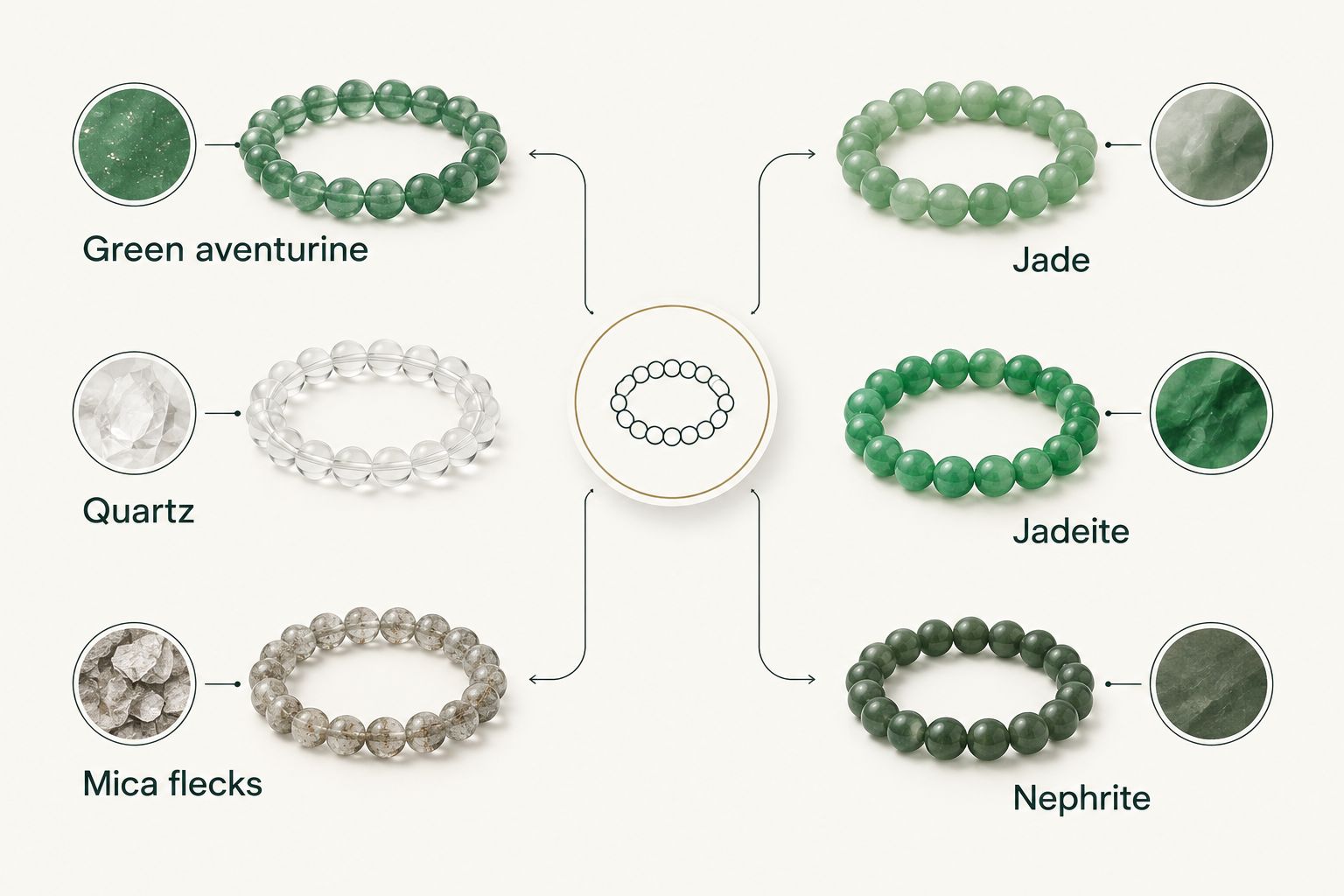
If you are deciding from a product photo
Zoom in for the pattern you like, but use the written material details to decide what the bracelet is. Flecks can be part of green aventurine's appeal. Jade may have a smoother-looking presentation, yet appearance varies, and neither a perfectly even color nor a speckled one proves a listing genuine.
Ask a direct question when the listing is vague: What are the green beads made of? If the answer is only a feeling, a color, or a spiritual association, you still do not have the material information needed for a green aventurine vs jade decision. A seller can describe symbolism and material separately; you need both statements kept clear.
Green aventurine: best for a flecked green quartz bracelet
Green aventurine is quartz whose inclusions can create a gentle, scattered shimmer called aventurescence. Some beads show that effect readily; others look quieter until you turn them in the light. Choose it when the visible character of the stone matters to you more than a perfectly even green surface.
In contemporary crystal practice, people often associate green aventurine with opportunity, growth, and an open-hearted approach to change. These are intentions you can attach to a ritual, not effects the mineral produces or outcomes it guarantees. For a bracelet, that distinction is useful: you can let the stone remind you to act on an opportunity without expecting it to create one.
Quartz has a Mohs hardness of 7, according to GIA's quartz reference material. The Mohs scale compares resistance to scratching; it does not promise that a bead will survive a drop, a sharp impact, or strain on its cord. A bracelet's durability also depends on its construction and how you wear it.
Best for: You want a green bracelet whose texture rewards a closer look, or you want a simple physical reminder of an intention you have chosen yourself. Less suited to: You specifically want jade, an evenly colored bead, or jewelry whose symbolic meaning is rooted in jade's Chinese cultural history. Buying aventurine because it resembles jade will not give you jade.
Jadeite or nephrite: best for someone seeking jade specifically
A bracelet described as jade should identify its material as jadeite or nephrite. Both fall under the name jade, but they are not interchangeable mineral labels. GIA's jade guidance treats them separately and discusses how treatments can affect what a buyer is seeing. When the listing does not say which material it contains, ask before making jade the reason for your choice.
Jade has a long history in Chinese art and material culture, documented by institutions including GIA and The Metropolitan Museum of Art. That history belongs to jade itself; it should not be transferred to every green stone or folded into a general claim about crystal energy. If cultural meaning draws you to a jade bracelet, learn which jade material the piece contains and keep that context distinct from your personal ritual.
Nephrite has a Mohs hardness of approximately 6 to 6.5, while jadeite is approximately 6.5 to 7, as listed in GIA's jade reference material. Those figures concern scratching, not a complete ranking of toughness or bracelet quality. A bead can still chip, and an intact bead can still be lost if the bracelet's connection fails.
Best for: You want jade for its material identity, appearance, or cultural context and can confirm whether the bracelet uses nephrite or jadeite. Less suited to: You want a low-effort purchase based only on the word green. An unspecified jade label leaves the most important part of the comparison unanswered.
Why the choice varies from bracelet to bracelet
Two bracelets can share a green palette without offering the same experience. Use these checks before you settle on one in 2026:
- Stated material: Aventurine should be identified as aventurine; jade should be identified as nephrite or jadeite. Do not substitute a color name for either answer.
- Visible pattern: Decide whether you enjoy aventurine's possible flecks or prefer the look of the particular jade beads in front of you. Judge the individual piece, not a generic photo of the stone.
- Other stones: A mixed-stone bracelet can express an intention through several beads, but it will not show you what an all-aventurine or all-jade strand looks like.
- Personal intention: Growth and abundance are common modern associations for green aventurine. Jade's meanings draw on different cultural histories. Neither association is a measured property of a bead.
- Daily handling: Think about contact with hard surfaces, water, and the condition of the bracelet's cord or fittings. Material hardness is only one part of wear.
- Clarity of description: If treatment or exact jade type matters to you, look for an explicit answer before choosing. Do not infer it from color or a product title alone.
Notice which question remains after you have looked at a bracelet. If it is What does this remind me to do?, choose an intention you can practice. If it is What material am I paying attention to?, get the identification first. That order keeps a meaningful purchase from depending on a guess.
How to choose a bracelet you will actually wear
- Name the intention. Write down a word you want to remember, such as patience, growth, or balance. The word guides your ritual; it does not assign a guaranteed power to the stone.
- Choose the material. Pick green aventurine for green quartz with possible mica flecks, or ask for nephrite or jadeite if you want jade. If neither look feels right, do not force the comparison.
- Check the full composition. Read the entire listing for other stones and materials. A bracelet with one jade charm is different from a strand of jade beads; a mixed aventurine stack is different from an aventurine-only strand.
- Picture everyday wear. Think about the bead size, how the bracelet sits alongside other jewelry, and whether you will remove it during activities that strain or knock it. Use the listing's measurements rather than guessing from an image.
- Keep the ritual modest. Put the bracelet on while naming the action you intend to take. That moment can help you remember a choice; it is not evidence that the stone changes external events.
A simple comparison can prevent the most common mismatch: liking one green stone's story while ordering a bracelet made from another. Read the material line first. Then decide whether the bracelet's appearance and meaning still appeal to you.
Eclipticjew's crystal bracelet selection includes mixed-stone options rather than making every green piece an aventurine-only or jade-only choice. The Balance & Harmony Four-Stone Bracelet Set lists green aventurine with moonstone, aquamarine, and white turquoise. It fits a shopper who wants those stones together; it is not a substitute for a single-stone aventurine bracelet. If your goal is to compare aventurine beads directly against jade beads, keep that distinction in view while browsing.


Can you wear both green aventurine and jade?
Yes, you can wear both green aventurine and jade if you like the combination. Wearing them together does not turn their distinct materials or traditions into one system. Keep the bracelet comfortable, check its construction, and choose a meaning that remains personal rather than treating the pairing as a formula for results.
Is green aventurine the same thing as green jade?
No, green aventurine is quartz; jade means nephrite or jadeite. Both can appear green, but their color is not proof that they share a mineral identity. In a 2026 bracelet listing, look for those material names instead of relying on a broad green-stone label.
Which stone should a beginner choose for daily wear?
Choose the bracelet whose material is clearly stated and whose appearance you will enjoy wearing. Green aventurine offers visible flecks in many pieces; jade asks you to confirm nephrite or jadeite. For either choice, construction and careful handling matter alongside the stone.
Care for the bracelet, not just the stone
Stone guides often focus on mineral hardness and stop there. A bracelet has other parts that deserve attention, including its cord, thread, metal components, charms, and any materials paired with the beads. Check the care guidance for the whole piece before exposing it to water or cleaning products.
For ordinary surface cleaning, start gently: use a soft, dry cloth and inspect the bracelet as you handle it. Avoid striking the beads against hard surfaces. If you see a loose component or damaged cord, stop wearing the bracelet until you can address it; an undamaged gemstone does not keep a failing bracelet together.
If cleansing is part of your spiritual practice, distinguish physical cleaning from a symbolic cleanse. You can pause, hold the bracelet, and restate your intention without claiming that a method changes the stone's measurable properties. You do not need to soak an unknown cord or charm to make a personal ritual meaningful. In 2026, the careful choice is still the simple one: protect the materials while making space for the intention.
FAQ
What's the difference between green aventurine and jade?
Green aventurine is a variety of quartz, while jade refers to nephrite or jadeite. Their similar green color does not make them the same material.
Is green aventurine a type of jade?
No. Green aventurine belongs to the quartz family, not the jade materials nephrite or jadeite.
Which is better for an everyday bracelet, green aventurine or jade?
Choose the clearly identified stone whose look you prefer, then check the bracelet's construction. Neither mineral name alone tells you how a finished bracelet will hold up.
How can I tell whether a jade bracelet contains jadeite or nephrite?
Ask the seller for the material identification; appearance alone is not a reliable answer. A listing that says only jade leaves that distinction unresolved.
Does green aventurine bring luck or abundance?
Green aventurine is often associated with opportunity and abundance in contemporary crystal practice, but it does not guarantee either. You can use the bracelet as a reminder of actions you want to take.
Can I wear green aventurine and jade together?
Yes, you can wear green aventurine and jade together if the combination suits you. Their meanings come from different contexts, so treat any shared intention as your own practice rather than a fixed rule.
Should I put my green stone bracelet in water to cleanse it?
Check the care guidance for the entire bracelet before using water. A symbolic cleanse can be a quiet pause to restate your intention without wetting the beads, cord, or charms.
One last thing
The most useful question in a green aventurine vs jade comparison is not which stone has the stronger meaning. It is whether the bracelet's materials match the meaning you chose. Eclipticjew crystal jewelry gives you room to choose by intention, but your next step is practical: read the material description, check for mixed stones, and pick the piece you will want to reach for in 2026.


