
A gratitude ritual works without forced positivity when you name what was difficult, notice something you genuinely appreciate, and choose a practical next step. You do not need to feel thankful for pain, excuse someone’s behavior, or finish in a better mood. The practice is an honest pause, not a test of how positively you can describe your day.
- A gratitude ritual leaves room for appreciation and disappointment in the same reflection.
- Use gratitude journaling to name a specific detail, not to rewrite a difficult experience.
- EclipticJew natural-stone jewelry is optional personal symbolism; an honest reflection needs no purchase.
- End your daily intention with an action, a boundary, or permission to stop.
How do you practice a gratitude ritual without forced positivity?
Describe the day as it was before looking for anything to appreciate. Then name a detail you can acknowledge without arguing yourself into gratitude. Finish by identifying what you need next.
If a blank notebook makes reflection feel like homework, start aloud. You can also adapt a gratitude meditation into a quiet pause rather than a written list. Neither format requires a cheerful ending.
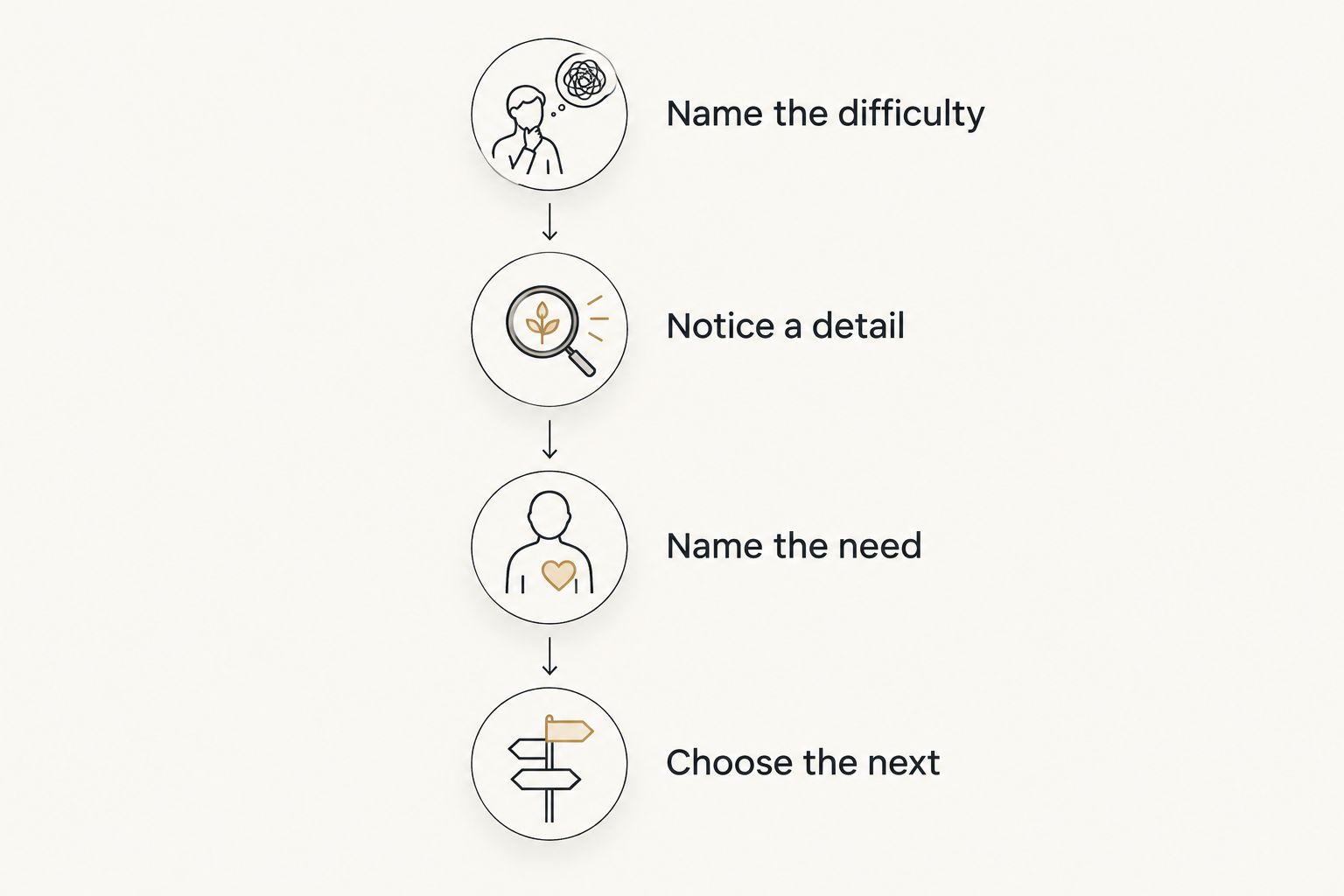
Use this sequence in your 2026 journal or wherever you keep personal notes:
- Name the difficulty. Write one factual sentence about what happened, without turning it into a lesson.
- Notice a detail. Name something you appreciate: help you received, a useful object, an enjoyable moment, or your own effort.
- Name the need. Ask what remains unresolved and what would help you respond.
- Choose the next step. Make it small and within your control. Stopping the reflection is also an option.
For example, after a difficult conversation, you might write: The conversation hurt. I appreciated having somewhere private to sit afterward. I need time before answering. My next step is to leave the message unanswered tonight.
That reflection does not declare the conversation good. It keeps the hurt visible while acknowledging something else that was also true.
Why this matters: appreciation is not approval
You can appreciate someone’s help and still disagree with them. You can value having a job and still need better working conditions. You can notice a pleasant moment during grief without treating grief as something to overcome through thankfulness.
Gratitude does not require you to approve of the circumstances around it. Keep the object of appreciation specific: a helpful message, a meal someone prepared, or the fact that you asked for support.
For a 2026 gratitude practice, choose a rule that protects this distinction: no entry has to redeem the whole day. A small acknowledgment is enough. If nothing feels genuine, record what happened and stop there.
Which gratitude ritual format fits your day?
Choose the format that asks the least of you while still allowing an honest answer. These are practical options, not treatments or promises about how you will feel.
| Format | Best for | Useful feature | Limitation |
|---|---|---|---|
| Spoken pause | A day when writing feels burdensome | Needs no notebook or preparation | Leaves no record unless you make one |
| Written reflection | Separating an event, a feeling, and a next step | Lets you review your own wording | Can become another task to complete |
| Shared check-in | Appreciating someone who welcomes the conversation | Makes thanks specific and direct | Requires consent and room for different feelings |
| Object reminder | Remembering to pause during an ordinary routine | Gives the practice a visible or tactile cue | The object cannot do the reflection for you |
Spoken pause: a 1-minute starting point
Set aside 1 minute as a suggested starting point, not a required duration. Say what happened, what you noticed, and what you need. You do not have to say it beautifully.
This format suits a transition: closing your laptop, putting down your keys, or finishing the dishes. Its limitation is distraction. If you lose your place, return to the question rather than restarting the ritual.
Written reflection: a 3-sentence starting point
Try 3 sentences instead of filling a page. Give each sentence a separate job: describe the difficulty, acknowledge a genuine detail, and identify your next step.
Writing creates room to check whether your language is honest. Its limitation is the temptation to produce a polished entry. Cross out anything that sounds impressive but does not match your experience.
Shared check-in: appreciation without a demand
Ask whether the other person wants to share something they appreciated. Offer your own answer without requiring theirs. A shared ritual is an invitation, not an instruction to feel grateful.
Be specific when thanking someone. Naming the action gives your appreciation a clear subject. Avoid using the check-in to settle an argument or require reassurance.
Why your gratitude ritual varies from day to day
Your reflection does not need the same length, tone, or format every day. Adjust it to the situation rather than treating consistency as a performance.
- Privacy: Choose silent reflection when speaking or writing would expose something you want to keep private.
- Attention: Use a shorter prompt when a long entry would become another unfinished task.
- The event: An ordinary inconvenience and a serious loss do not call for the same language.
- The audience: Private notes can hold details that do not belong in a shared conversation.
- Personal meaning: Use a familiar object or phrase only if it feels relevant to you.
- An unresolved need: Keep room for a boundary, a request, or practical help after appreciation.
Review your 2026 routine by asking whether it leaves space for truthful answers. If the format repeatedly asks you to perform happiness, change the format. You do not need to change your feelings to fit it.
What can you write when nothing feels good?
Write that nothing feels good right now. Then separate observation from appreciation: you can record what happened without calling any part of it a blessing.
Try these prompts without requiring a positive answer:
- What made the day difficult?
- Was there anything I did not have to manage alone?
- What did I do that deserves acknowledgment, even if the result disappointed me?
- What do I need that gratitude cannot provide?
- What can I leave unfinished tonight?
If you cannot name something you appreciate, end with a need. For example: I do not have a grateful thought tonight. I need food, privacy, and a conversation with someone I trust.
An honest empty space is better than an invented grateful feeling. The ritual remains yours when you can decline its prompt.
How do you avoid turning gratitude into self-blame?
Keep appreciation separate from obligation. Being grateful for help does not mean you must accept every request from the person who helped you. Appreciating an opportunity does not remove your right to ask questions or change direction.
Listen for sentences that begin with an accusation against yourself: I should be grateful, others have it worse, or I have no right to be upset. Replace the comparison with a direct description of your own situation.
When work was difficult
Name the actual issue: an unclear request, an uncomfortable interaction, or a workload you need to discuss. You can appreciate a colleague’s support without describing the whole workday as positive.
Let the next step address the issue. Write down a question, request clarification, or decide what you want to raise in a conversation.
When a relationship hurt
Acknowledge the hurt before looking for appreciation. You do not owe someone a gratitude statement simply because they also did something kind.
If appreciation feels like pressure to forgive, leave it out. Your reflection can focus on support elsewhere and the boundary you want to keep.
When your own effort disappointed you
Separate effort from outcome. You can acknowledge that you prepared, tried, or asked for help without claiming the result was good.
Choose a next step that responds to what happened. That might mean revising a plan, resting before deciding, or asking for feedback rather than writing another affirmation.
Can a bracelet be part of a gratitude ritual?
A bracelet can be an optional reminder to pause. It does not create gratitude, change events, or replace the practical part of the reflection. A notebook, an ordinary keepsake, or no object at all can serve your routine.
EclipticJew natural-stone jewelry is best for shoppers who want an optional symbolic reminder, not a promised result. The useful question is whether you enjoy the object and understand what meaning you are choosing to give it.
If you already own a bracelet, decide on a simple association: seeing it reminds you to name something honestly before reacting. You do not need a special stone for that instruction. The action is yours.
EclipticJew offers natural-stone and crystal jewelry alongside pieces with cultural symbolism. Keep those meanings distinct from a personal gratitude practice; adding beads does not make this routine a Buddhist, Taoist, or chakra practice. Optional Taoist blessings apply only to select pieces, so check the individual listing rather than assuming every bracelet includes one.
Before buying, check the listed materials, measurements, construction, and care instructions. The advantage of an object reminder is its physical presence. The limitation is equally clear: it adds a possession, not an answer to what troubled you.
A gratitude ritual template you can actually reuse
Use this 2026 reflection template without a streak, score, or minimum number of grateful thoughts. Copy only the prompts that help you speak plainly.
What happened: Describe an event without explaining why it was meant to happen.
What I felt: Name your response without correcting it.
What I appreciate: Identify a specific detail, or leave this line blank.
What I still need: State the need that remains after reflection.
What I will do next: Choose an action within your control, including asking for help or stopping for now.
Keep your daily intention separate from a prediction. An intention describes how you want to act; it does not guarantee what follows. The same distinction applies when working with new moon intentions and action: symbolic timing can frame a personal practice, while your next step remains practical.
FAQ
How do I start a gratitude ritual if I have never done one?
Start by naming what happened, something you genuinely appreciate, and what you need next. You can speak the answers or write them; no object or purchase is required.
How long should a gratitude ritual take?
A 1-minute pause is a suggested starting point, not a required duration or a proven dose. Stop when you have answered honestly rather than extending the practice to reach a target.
Can I practice gratitude when I am angry or sad?
You can practice gratitude while angry or sad without trying to remove either feeling. Name the difficulty first, and leave the appreciation prompt unanswered if nothing feels genuine.
What if I cannot think of anything to be grateful for?
Record that you cannot name anything right now, then identify what you need. You do not have to manufacture appreciation to complete a reflection.
Is gratitude journaling better than saying it aloud?
Neither format is required for an honest gratitude ritual. Writing gives you a record, while speaking avoids the need for a notebook; choose the format you prefer.
Do I need crystals for a gratitude ritual?
You do not need crystals for a gratitude ritual. EclipticJew jewelry can be an optional symbolic reminder, but the reflection and practical choices remain yours.
Can I do a gratitude ritual before bed?
You can reflect before bed without expecting the ritual to improve sleep. Remove bracelets at night, and do not sleep in elastic-cord jewelry.
Does gratitude mean I have to forgive someone?
Gratitude does not require forgiveness, reconciliation, or approval of someone’s behavior. You can acknowledge a kindness and still maintain a boundary.
One last thing
The most useful line in your 2026 gratitude ritual might be the one that names what gratitude cannot fix. Keep it. Appreciation does not arrange a difficult conversation, meet an unmet need, or set a boundary on your behalf.
If a stone feels meaningful, choose it for that personal association and check your wrist measurement before choosing a bracelet. If none fits, keep the practice and skip the purchase. An honest pause is already complete without jewelry.


