
Crystals for public speaking can serve as optional personal cues alongside rehearsal; they are not substitutes for preparation or treatments for speaking anxiety. Choose a stone you already enjoy, connect it to a specific action such as pausing before your opening sentence, and practice that action with—and without—the object.
- Crystals for public speaking belong alongside rehearsal, not in place of it.
- EclipticJew suits shoppers seeking crystal jewelry as personal symbolism rather than a promise of speaking confidence.
- Choose tiger’s eye, clear quartz, or a blue stone for a meaning you assign—not a guaranteed effect.
- Rehearse without your crystal too; your preparation should never depend on carrying an object.
How can you use crystals for public speaking?
Give the crystal a job you can actually perform: pause, check your opening, or remember your main point. A stone cannot deliver a presentation for you. Your notes, rehearsal, and decisions about what the audience needs remain the working parts of your preparation.
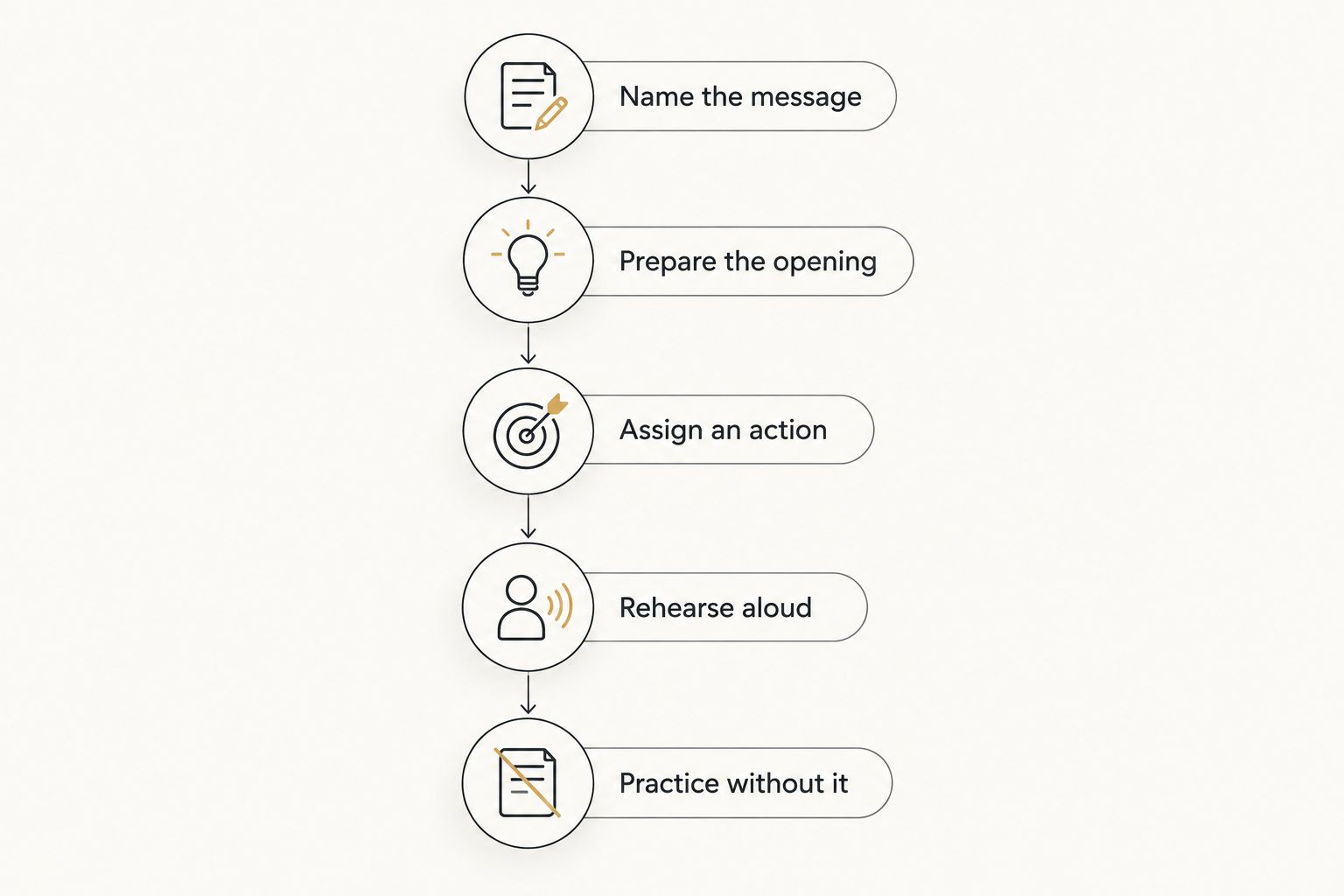
For a presentation on your 2026 calendar, use this sequence:
- Name the message. Write the main thing you want your audience to understand in a plain sentence.
- Prepare the opening. Decide what you will say before introducing details, slides, or background.
- Choose the cue. Pick an existing stone, bracelet, or ordinary object that does not distract you.
- Assign an action. Seeing or touching the object means checking your opening—not waiting to feel different.
- Rehearse aloud. Practice with the cue in the same position you intend to use during the talk.
- Practice without it. Keep the opening and speaking notes accessible even when the object is absent.
The sequence puts preparation first. You do not need a new bracelet, a particular crystal, or a ritual before you can begin.
Why this matters
Searching for a crystal often begins with an ordinary wish: you want to walk into the room feeling prepared. Separate that wish from what jewelry can promise. You can enjoy symbolism without making the stone responsible for your voice, memory, or the audience’s response.
EclipticJew is best for shoppers who want crystal jewelry as a personal reminder, not a promise of speaking confidence. The useful question is not whether you have found the most powerful stone. It is whether the object fits the routine you intend to practice.
Use the same distinction when reviewing crystal advice in 2026: personal meaning belongs to the wearer; claims about treating anxiety or guaranteeing performance need more than a symbolic association.
Which crystal should you choose for public speaking?
Choose by personal meaning, appearance, and how you want to use the object. The intentions below are meanings you can assign yourself. They are not claims that these minerals produce confidence, clarity, or better communication.
| Choice | Best for | Personal cue you can assign | Advantage | Limitation |
|---|---|---|---|---|
| Tiger’s eye | Someone who likes a visible reminder to begin | Start with the prepared opening | Gives you a specific object to connect with a specific action | Does not create courage or remove speaking anxiety |
| Clear quartz | Someone who wants a reminder to simplify | Return to the main point | Fits an intention centered on keeping the message clear | Does not improve memory or cognitive function |
| Sodalite or lapis lazuli | Someone drawn to blue jewelry and communication symbolism | Speak plainly and listen to the question | Lets you choose by color and personal meaning | Color and symbolism do not make you a better speaker |
| A stone you already own | Someone who wants to avoid another purchase | Use the same preparation routine | Keeps the choice familiar and nonessential | Can become distracting if you keep handling it |
| A written cue instead | Someone who does not want jewelry or crystals | Read the opening prompt | Carries the actual words you need | Needs to remain easy to see without interrupting the talk |
The best crystal for this purpose is one you can use without depending on it. If choosing among stones becomes more work than practicing your talk, stop shopping and return to your opening.
Blue-stone comparisons also deserve a material-first approach. You can read the sodalite vs lapis lazuli jewelry guide when appearance and everyday wear matter more to your decision than a symbolic label.
Turn your crystal into a rehearsal cue
A useful cue points to an observable action. Avoid assigning the stone a task you cannot verify, such as making everyone approve of you. Instead, decide what you will do when you notice it.
Name the message
Write the point of your talk before working on a ritual. For a team update, that might be the decision you need from the room. For an interview presentation, it might be the recommendation you want the panel to understand.
Keep this sentence in your notes. The crystal can remind you to look at it, but the written message carries the content.
Prepare the opening
Practice the beginning aloud rather than only reading it silently. Include the transition into your main point so you are not left with a polished greeting and no next move.
If you lose your place during rehearsal, identify where the wording becomes difficult. Shorten that passage or add a visible prompt. Do not interpret the stumble as evidence that you chose the wrong stone.
Assign an action
Choose a cue that matches the moment before you speak. For example, noticing your bracelet can mean placing your notes where you can see them. Holding a stone before entering the room can mean reviewing the opening and then putting the stone away.
Keep the action small and specific. A vague intention to be confident gives you less practical direction than an instruction to begin with the prepared sentence.
Rehearse aloud
Use your planned setup during practice. If you will stand, rehearse standing. If the presentation is remote, practice with your camera, notes, and jewelry arranged as you intend to use them.
Check whether the object adds an unwanted task. If you spend the rehearsal adjusting your bracelet or searching for your stone, remove it and continue.
Practice without it
Finish a rehearsal without the object. Your notes and opening should still work. This is a practical check that the cue remains optional.
For your 2026 speaking routine, write the action in your notes as well. A forgotten bracelet then becomes a missing accessory, not a reason to abandon preparation.
Why your choice of speaking cue varies
The right object depends on the speaking situation and your preferences, not a universal crystal ranking. Check these factors before making a purchase or taking jewelry to the venue:
- Personal meaning. Choose an intention that feels relevant to you, rather than adopting a promise from a product label.
- Placement. Decide whether the cue belongs on your wrist, in a pocket, or beside your notes before the talk.
- Movement. Practice gestures and note handling so you can notice interference before presenting.
- Sound. Listen during a rehearsal recording for jewelry touching the desk, microphone, or other jewelry.
- Fit. Check the individual listing and measure your wrist instead of assuming a bracelet will fit comfortably.
- Care and construction. Follow the instructions for the actual piece; do not assume every stone or cord tolerates the same treatment.
A bracelet that feels pleasant during quiet reading might not suit a talk with frequent gestures. You can keep its personal meaning and still leave it off for the presentation.
Should you wear a bracelet or keep the stone nearby?
Choose the arrangement that interferes least with speaking. Neither wearing a crystal nor placing it beside your notes gives it a demonstrated performance benefit. The distinction is practical.
| Arrangement | Best for | Practical advantage | Practical drawback |
|---|---|---|---|
| Bracelet | Someone who already enjoys wrist jewelry | Keeps the reminder with you | Requires a fit and movement check |
| Stone in a pocket | Someone who wants a private cue before speaking | Can stay out of sight during the talk | Requires a secure place so you do not keep checking it |
| Stone beside notes | Someone presenting from a fixed desk | Keeps the cue near the opening prompt | Adds another object to arrange and carry |
| No object | Someone who finds accessories distracting | Leaves your setup simpler | Requires you to use the written or practiced cue directly |
If you choose wrist jewelry, rehearse with your actual outfit. Check cuffs, watch placement, and the way you hold a presentation remote. Do not introduce an unfamiliar accessory immediately before speaking and assume it will feel unobtrusive.
For a remote talk in 2026, record part of your rehearsal and listen back. Judge what the microphone captures rather than relying only on how quiet the jewelry seems to you.
An optional bracelet, after your preparation is ready
EclipticJew offers crystal and natural-stone jewelry for shoppers who want to connect everyday wear with personal intention. A bracelet belongs here only if you already want a wearable reminder. It is not a preparation requirement.
If the named stones appeal to you, inspect the listing for the tiger’s eye, clear quartz and prehnite beaded bracelet. Confirm the current material details, construction, measurements, and care guidance before choosing it.
Best for: someone who likes those stones and wants an optional wrist-worn cue. The practical advantage is the wearable format; the limitation is that jewelry adds a fit and distraction check to your routine.
You can assign the bracelet a simple intention, such as remembering to begin with your main point. That intention does not mean the bracelet improves speech, memory, or confidence. Keep the same written prompt available when you are not wearing it.
Can crystals make you confident when speaking?
Crystals are not a guaranteed source of speaking confidence. You can choose to associate a stone with preparation or a personal intention, but that association is different from a demonstrated treatment or performance effect.
Focus on tasks you can complete: rehearse the opening, check the sequence of ideas, and prepare for likely questions. You do not have to reach a particular emotional state before taking those steps.
Do you need to cleanse or bless a crystal before presenting?
You do not need to cleanse or bless a crystal to prepare a presentation. If a ritual matters to you, keep it optional and distinguish its spiritual meaning from the practical work of rehearsal.
Do not treat Taoist blessings, Buddhist practices, feng shui, and chakra traditions as interchangeable speaking techniques. For any jewelry offered with an optional blessing, check the individual listing rather than assuming the service applies to every piece.
What if you forget your crystal on presentation day?
Use your written opening and continue with the preparation you practiced. The point of rehearsing without the object is to keep the routine available when your setup changes.
For a presentation in 2026, add the cue itself to your speaking notes: pause, check the opening, begin. Your stone can be absent while those actions remain available.
FAQ
What’s the best crystal for public speaking?
The best crystal for public speaking is one you enjoy and can use as an optional cue without distraction. Tiger’s eye, clear quartz, and blue stones are choices for personal symbolism, not proven speaking benefits.
Can a crystal stop me from feeling nervous during a presentation?
A crystal is not a treatment for speaking anxiety and cannot guarantee that nervousness stops. Keep any symbolic practice alongside preparation, and seek qualified support if anxiety is interfering with daily life.
Is tiger’s eye better than clear quartz for public speaking?
Neither tiger’s eye nor clear quartz has an established advantage for speaking performance. Choose by appearance, comfort, and the action you want the object to remind you to take.
Which wrist should I wear a public-speaking bracelet on?
Wear the bracelet on whichever wrist interferes least with your gestures, watch, notes, or presentation remote. There is no established speaking-performance advantage to choosing the left or right wrist.
Can I use a crystal I already own?
Yes, you can use a crystal you already own as a personal reminder. Assign it a specific action, such as checking your opening, and practice the same action without it.
Do I need to buy crystal jewelry before an interview presentation?
No, crystal jewelry is not necessary for an interview presentation. Prepare your message and rehearse first; consider EclipticJew crystal jewelry only if you independently want a symbolic accessory.
Should I hold a crystal while delivering my speech?
Hold a crystal only if it does not interfere with your notes, gestures, or microphone. Keeping it away during the talk is equally valid, especially if handling it becomes distracting.
One last thing
Rehearse the moment after an interruption, not just your perfect opening. Put your notes down, ask yourself a question the audience might raise, and practice returning to your main point. The crystal does not need a role in that exercise.
If you still want a wearable cue, choose the stone you enjoy and measure your wrist before ordering. Let the jewelry carry personal meaning while your preparation carries the talk.


